US Treasury Secretary says the US is no longer considering imposing 100% tariffs on China. How to evaluate this? How long will this ‘truce period’ bring to Sino-US economic and trade relations?
View 1:
It’s not surprising that the US Treasury Secretary says the US is no longer considering imposing 100% tariffs on China. After all, after the tariff war in April this year, the whole world knows that the US cannot afford such tariffs. The threat of 100% tariffs in November was purely Trump venting his frustration for not getting the Peace Prize. This meeting is just giving Trump a way to save face. However, not imposing them now doesn’t mean they won’t be imposed in the future. After all, the US debt problem is right there, and the Trump administration has to find ways to solve it, and raising taxes is almost the only method. If they don’t impose them externally, they will impose them internally, and the impact is roughly the same. From China’s perspective, the Trump administration imposing tariffs externally is more advantageous than imposing them internally. After all, imposing tariffs on us allows them to use various negotiations to delay the pace of tax hikes. Conversely, if they directly impose heavy taxes internally, we wouldn’t even have a pretext to intervene, and the situation would clearly spiral out of control. Given the current US fiscal situation, tariffs are inevitable; the only question is when they will start. For us, later is naturally better than sooner, so the best outcome now is to keep delaying as long as possible. As for Trump and his team often talking nonsense, we actually welcome them doing so. Because affected by the US debt problem, domestic dissatisfaction is continuously rising. Even without the Trump administration’s nonsense, it would still keep rising. At this time, having leaders who talk recklessly helps them stabilize the US situation, as long as they don’t talk nonsense on key issues with us. In terms of the international strategic situation, time is still on China’s side; we can afford to delay. At the same time, we should not expect the US to actually remove the tariffs, as that would be no different from economic suicide, unless Trump turns around and imposes heavy taxes domestically to fill the gap. The Sino-US trade situation is likely to continue deteriorating. This is not a problem that can be solved by the efforts of the two governments, but an inevitable result of the US entering a major economic downturn cycle. Therefore, this brief peace is hard-won and should be cherished, but we should not expect the truce to last long; escalation of contradictions is inevitable.
View 2:
It depends on when Trump contradicts his current self.
Speaking of which, isn’t this just creating imaginary cards as bargaining chips? China’s demand is to return to the pre-2018 trade war situation. If that can’t be done, then just keep talking for now. The only consensus is that we’ll talk again next time.
Anyway, Trump has already profited from the stock market once and surely wouldn’t mind doing it again next time.
View 3:
Fight? We’re ready anytime!
Talk? Don’t even answer the phone!
This is clearly shitting on Trump and then asking him for toilet paper.
Cancel all tariffs and restrictions, including those on semiconductors, artificial intelligence, and other areas.
With these conditions, are you trying to roast Trump over fire?
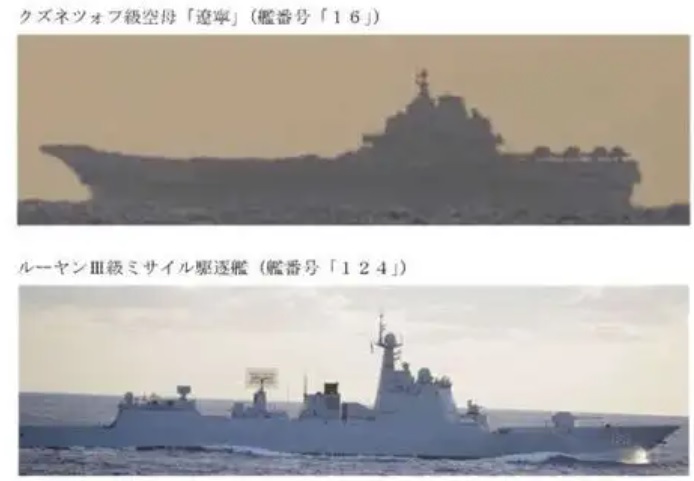
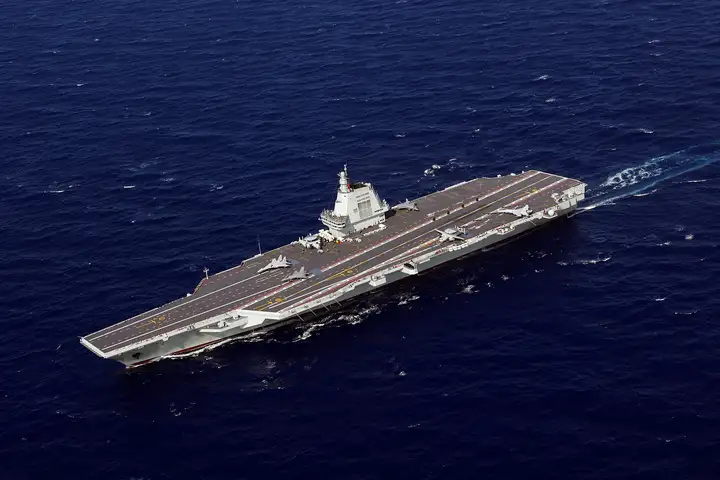
Over here, while talking, they’re intensifying training for landings.
Over there, the Commerce Secretary is so anxious that he’s cursing out loud.
Where the enemy can go, we can go too.
The roles have reversed.
View 4:
Wait until after Christmas. After the Americans finish their holidays, they’ll shout about raising tariffs again. Especially right before our Chinese New Year. Watching Trump’s moves, I feel like he’s about to ascend to the throne as the emperor of the American empire! Government shutdown, while directing the government to compensate himself with money—diverting public funds for private use. The military stops paying salaries, and he pays out of his own pocket—buying military loyalty (probably the next step is to shout before training: “Who gave you the food you eat?” “Trump! Trump!” “Whose money are you spending?” “Trump! Trump!” “Whose soldiers are you?” “Trump! Trump!”). Policies are all announced through personal media—blurring the line between public and private. Using policy news to manipulate the stock market for profit, leading his followers to make money or annex land—forming cliques for personal gain. The story of “pointing at a deer and calling it a horse” is still ongoing. I think it’s almost there; the next step is, “What are you all doing? You’ve put me in this position, making me so embarrassed. Alas, it has to be this way.”
View 5:
So far, it’s all the US talking. No one knows what China has actually gained; everyone is just guessing.
China delayed rare earth controls and might buy US soybeans and natural gas. In exchange, the US won’t impose additional 100% tariffs and won’t escalate sanctions against China?
How could this be the result of playing a good hand? How could the Chinese people accept this?
So, there must be some benefits we don’t know about.
View 6:
It can be called a “American diplomatic joke.”
First, announce something you have no ability to do, then declare you’re not doing it, and claim to the outside world that you’ve “made a major diplomatic concession,” so the other side should also give you benefits.
Putting this behavior into the context of Gambia, it would be like:
Before negotiations with the US, Gambia announces, “We will annex the entire US in three days.” During negotiations, they say, “Gambia is no longer considering annexing the US,” thus preventing the demise of the US and becoming the great savior of the American people. So, “to show gratitude, it’s not too much for you Americans to cede the territory east of the Mississippi River to Gambia, right?”
Every time the US engages in “creating imaginary cards,” it’s similar to this kind of clown behavior.
View 7:
It’s not that agreements haven’t been reached across the Pacific, but Trump’s agreements rarely last more than a month without trouble. For China, any concession or goodwill will be seen by Trump as weakness and compromise. Of course, it would be可喜可贺 if an agreement is reached, but personally, I have no confidence in the US, especially in the Trump administration.
View 8:
No surprise. Neither side can allow the 100% tariffs to actually be implemented, but maximum pressure can help the negotiating counterpart accelerate internal promotion. It seems that a transaction framework has been defined now. It’s unclear whether specific numbers have been finalized; if they have, it will happen quickly. Those who have participated in business negotiations know that internal management capability is as important as external bargaining. Eliminating internal friction and resistance at every level requires tremendous effort, especially the valuation and accounting from the finance department. But if the numbers are within the acceptable range for both sides and the overall leader strongly pushes it, execution below will be quick. My irresponsible guess: an agreement can be signed before the Two Sessions in March next year, lasting at least 2-3 years.
View 9:
As the first president in US history to openly trade stocks while in office, there will definitely be no results in Sino-US trade negotiations during his term. Things are just pretending to talk, that’s all. Everyone should not expect any good news or believe any bad news. Anyway, Sino-US negotiations are just for show; everything will be left for the next administration to solve. Actually, both countries know in their hearts that this is a life-and-death contradiction that simply cannot be resolved. The problem is that neither side has the determination for a hot war, so they can only pretend to talk. Although it’s destined to yield no results, because even if there are results, it’s just a piece of worthless paper that no one believes. Between two hostile countries with zero trust, the final outcome will be a territory naturally formed based on strength. It definitely won’t come from negotiations where neither side trusts the other.
View 10:
Not imposing 100% tariffs means we won? So quick to retreat?
Do those who were chanting “win, win, win” a few days ago remember what the winning points were?
What price was paid to avoid these imaginary 100% tariffs? Why don’t you say it out loud?
Alright, hear me out! Pak111game ain’t half bad. I was a little skeptical at first, but the interface is pretty slick, and I haven’t had any major issues. Definitely worth checking out if you’re looking for something new. Check it out here pak111game.
Alright, checked out gembetapp. Easy to use and everything seems in its place, worth a quick look. Check it out at gembetapp
ezaemi
After testing many tools, I found kingph apk app offers fair odds and transparent mechanics for Filipino players seeking reliable digital betting entertainment today.
0v9y4o
Pingback: cheap cialis online
Pingback: cenforce sildenafil 200mg
Pingback: cenforce 150mg sildenafil citrate
8fsh3k
Hmm, the analysis here is solid, but remember that deep dives into prediction guides are key. Checking out jilitt link might give you a different angle on those potential wins! 🤔
yacht charter Montenegro https://rent-a-yacht-montenegro.com
Нужен сайт? разработка сайта под ключ в компании domenanet.by. Профессиональная разработка сайтов любой сложности в Минске: от интернет-магазинов до порталов.
Если нужен недорогой аккумулятор https://www.akb24v.ru 24 вольта для погрузчика, стоит обратить внимание на проверенные решения с оптимальным ресурсом и стабильной отдачей. Купить тяговую батарею 24V можно на сайте, там представлены варианты под разные задачи и типы техники.
главные новости россии новости кино и театра РФ
Обязательно к прочтению: https://perfumerio.ru/product-brands/lm-parfums/
All football match canli skor results online, game schedules, and league standings. Live updates, statistics, and easy access to information about matches and teams from around the world.
Live football scores https://canli-futbol.com.az up-to-date schedules, and league tables. Follow matches, check scores online, analyze team standings, and never miss a beat in world football.
Baky ucun deqiq hava proqnozu. Bu gun, sabah ve hefte ucun temperaturu, yagini? ehtimalini, kuleyin sгrуtini му hava seraitini onlayn yoxlayin.
Phasmophobia Game 2026 https://phasmo-phobia.com/ is a cross-platform horror game supporting PC, PlayStation, Xbox, and VR. Find out the game’s current price, platform list, system requirements, and the latest updates with new maps, events, and gameplay improvements.
На порталі https://visti.pl.ua зібрані головні новини Полтави та області. Тут публікують матеріали про події, транспорт, інфраструктуру та життя регіону.
Сайт https://news.vinnica.ua висвітлює події у Вінниці та регіоні. Новини, аналітика й корисні матеріали допомагають бути в курсі життя міста щодня.
На порталі https://krivoy-rog.in.ua зібрані головні новини Кривого Рогу. Тут публікують матеріали про події, транспорт, інфраструктуру та життя мешканців.
На сайті https://gazeta-bukovyna.cv.ua публікують свіжі новини Буковини та Чернівців. Тут ви знайдете актуальну інформацію про події, життя регіону, культуру й важливі зміни для мешканців.
На сайте https://chernomorskoe.info собраны новости Черноморского побережья и информация о курортных городах Одесской области. Узнавайте о событиях, отдыхе и развитии региона.
На портале https://o-remonte.com вы найдёте статьи о ремонте, дизайне и строительстве. Сайт предлагает практичные решения, рекомендации и идеи для создания уютного пространства.
На сайте https://blogimam.com публикуют статьи для мам о воспитании детей, здоровье и повседневной жизни. Полезные советы, личный опыт и идеи помогают справляться с заботами и находить время для себя.